offline relineation

“To pay attention, this is our endless and proper work.”
— Mary Oliver
A few months ago, I went to a panel discussion on liberation and experimental literature. Having recently emerged from a two year writing ordeal trying to translate the messiness of organising into words on a page that people might actually want to read, I was desperate for relatability, for reassurance, for words that would make me feel less exceptional. Writing can be an isolating affair, and while I was lucky to have two phenomenal co-authors, we were separated by distance and often by the complex distractions of our private lives.
Two ideas from that discussion trailed me home.
- The work of liberation is self work: it starts with the boundaries of the self
- The liberatory practice of writing makes you braver than you feel
For the past two years, I have spent most of my time off social media, reappearing every once in a while to promote some work or give a vague update nobody asked for. I have been trying to make sense of myself in a brave new offline world — a self whose writing practice and community organising was built on digital foundations. My disillusion with social media as a primary tool for grassroots activism is no secret (spoiler alert — it’s in the book), but admitting it as someone so previously embedded in digital organising has required humility and a healthy dash of self-acceptance.
On Instagram, I was more preoccupied with keeping up with the right things to share and align myself with than with exploring my own thoughts on the complex issues I was constantly reposting. Algorithms have no care for the messiness of nuance. A public arena primed for polarisation is not the space in which to explore the boundaries of the self. It will not grant you grace. It will not grant you serenity.
It has taken several months to untangle and process the impact of this offline “relineation”, redrawing the boundaries of the self and separating community work, liberatory work, from the prerequisite of online presence. Unwiring the preconditioning that told me connections had to be digital as well as physical, had to be visible at scale, in order to count, was a unique struggle, the deep-seatedness of which genuinely took me by surprise. Too often, we confuse being seen with being effective. A life online dulled my senses, chipped away at my edges, and filed down my fangs. What I have gained from this experience is far greater than what I have lost.
1. When your stories don’t appear in the algorithmic realm of their everyday digital consciousness, people do forget about you.
I’m not being theatrical — this is just objectively true, and I’m okay with it. I don’t think human beings are capable of having as many friends as I believed myself to have when my digital world was at its most vast. The real ones, the ride-or-dies, the special ones subscribed to my mises-à-jour, are few in number but mighty in spirit. These are the kind of friends who quietly send you books they know you’ll enjoy, who routinely ask after your family, who know your “tell” for an impending crashout, who can roast you without minimising your pain. And there will always be friends whose daily headlines you can’t keep up with, but who appear once a year or so over a lunch or a crisp walk, warmth and connection unchanged. Those friendships are their own kind of special.
2. The dignity of working with your hands
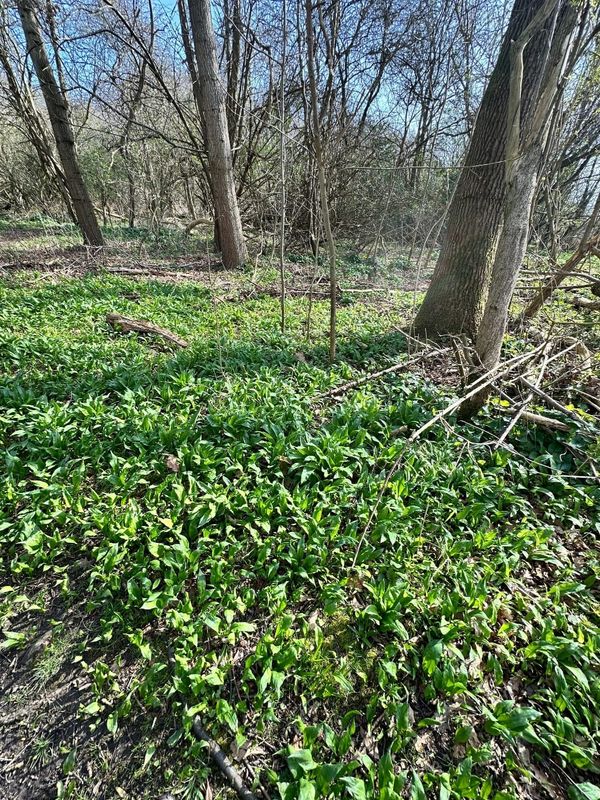
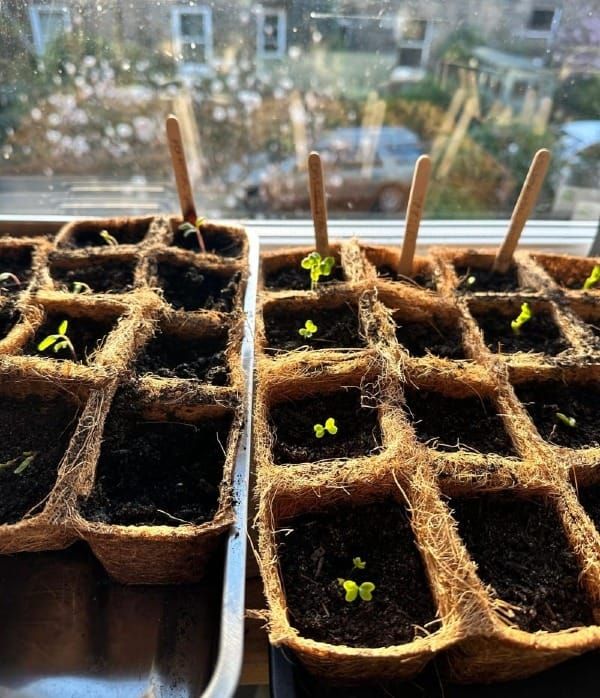
It is not new news to me that I bake my feelings; the weekly lockdown cake should have been a big clue. But extra time not spent poring over other people’s opinions in order to know how I should draft my own left me space to process my thoughts in the meditative whitespace of chopping, folding, kneading. Of foraging nature’s treasures (thank you, forest!) and returning home with a bounty to transform into sauces, scones, pestos and jams. Of digging the earth, planting seeds and obsessively nurturing the shoots. Of scribbling until my hand cramps. Of filling a binbag full of litter on a weekend walk. Suffice it to say that working my way physically through complex feelings is much more agreeable than sharing my every thought in an Instagram story. Instead of having that uncomfortably wired feeling from consuming too much digital caffeine, my brain is humming gently, and my stomach is satisfied. Neil Postman hit it on the nose in the 80s when he said that we are amusing ourselves to death, which I fear may be true of the TikTok algorithm. Offline, I may be less entertained, but I’m certainly more content.
3. Attention as practice
I began to resent the ways in which my attention was being hooked in without my realising it. The ads, yes, but the infinite content loop, the variable reward system of likes and comments, the constant comparison to a life better lived than mine.
My attention is not passive. I choose the people, ideas and activities I give it to. When I’m not spread too thinly, I have the mental capacity to engage deeply with long form reading and writing, political analysis, and (who knew?) actual discussion. In the past few months, I have been frequenting in my local community centre, engaging mostly (and by that, I mean I’ve been doodling, colouring in and sketching things at art sessions over a good blether) with people from demographics I don’t usually spend time with. Many of the people I have met are exactly those I would have defended from my virtual soapbox.
4. Stay engaged, but stay in your lane
I have been humbled at the pool a few times in life, thinking I could fit in with the fast swimmers in the rocket lane. And then quietly admitting defeat and ducking under the lane divider and returning to the medium lane, where I belong. Why, then, I felt that every social and cultural phenomenon required a “take” from me is still baffling and slightly cringe. I was once asked on a podcast to speak about China’s economic relations in Africa — presumably, because of my background in East and Southeast Asian anti-racism and my time living in Senegal, which makes me an expert, obviously. Cam doon, lass.
Communicating properly rather than broadcasting your feelings is hard work. I have had to have some honest and uncomfortable conversations with friends and set clear boundaries. I have also had to decouple my brain from the idea that people only show up for you when they know everything that’s going on. Now I understand why I was uncomfortable when friends I only spoke to once a year would suddenly check in after a post about my mental health, engaged and caring thanks to my digital smoke signal. What that looks like these days is friends sending postcards, offering to drop off meals when I’ve got a lot going on, or physically showing up to help me move house when I was struggling to establish a system or any kind of order.
My stint offline permitted me space to grieve a more analog time. When people didn’t ghost their friends in favour of Instagram stories. When I could sit quietly without any media stimulation whatsoever. When I didn’t feel anxious because I wasn’t performing enough to put me on the “right side of history” during a live streamed genocide.
All the same, I struggle to know how to continue my arm’s length relationship with Instagram. Like many creatives, I feel the pressure to promote my writing and nurture a network, but resent being resigned to the lowly status of a cloud serf, offering up my data and my consent to the techlords in the hope that someone notices my work. But will I sacrifice my newfound freedom for a higher place in your algorithm? Probably not.
I don’t want to stay relevant
I just want to stay afloat